
October 2nd – 4th, 2026
I arrived in Montreal with a tailored itinerary for a micro-weekend away. This probably
surprises no one who knows how I travel. When time somewhere is limited, I have a
habit of trying to stretch it—planning where I'll go, what I'll see, and how much life I can
reasonably squeeze between arriving and having to leave again.
Montreal, apparently, had other plans.
Almost immediately after my flight, I was hit with some kind of travel bug. Whatever
ambitious version of Friday evening I'd imagined quickly became me spending
practically the entire night inside my hotel room, exhausted and trying to sleep it off.
Initially, it felt frustrating. I'd travelled all this way and had barely any time here to begin
with. Rest felt suspiciously like wasted time.
In hindsight, though, maybe my body—or the universe, depending on how generously I
choose to interpret these things—was asking something of me that I haven't always
been particularly good at giving myself back home:
The ability to stop.
So, I did. Simply, because I didn’t have much in me to continue.
And maybe there was something fitting about beginning a weekend I would later
understand through movement by first being asked to stay still.
By the next morning, feeling considerably more human, I resisted the temptation to
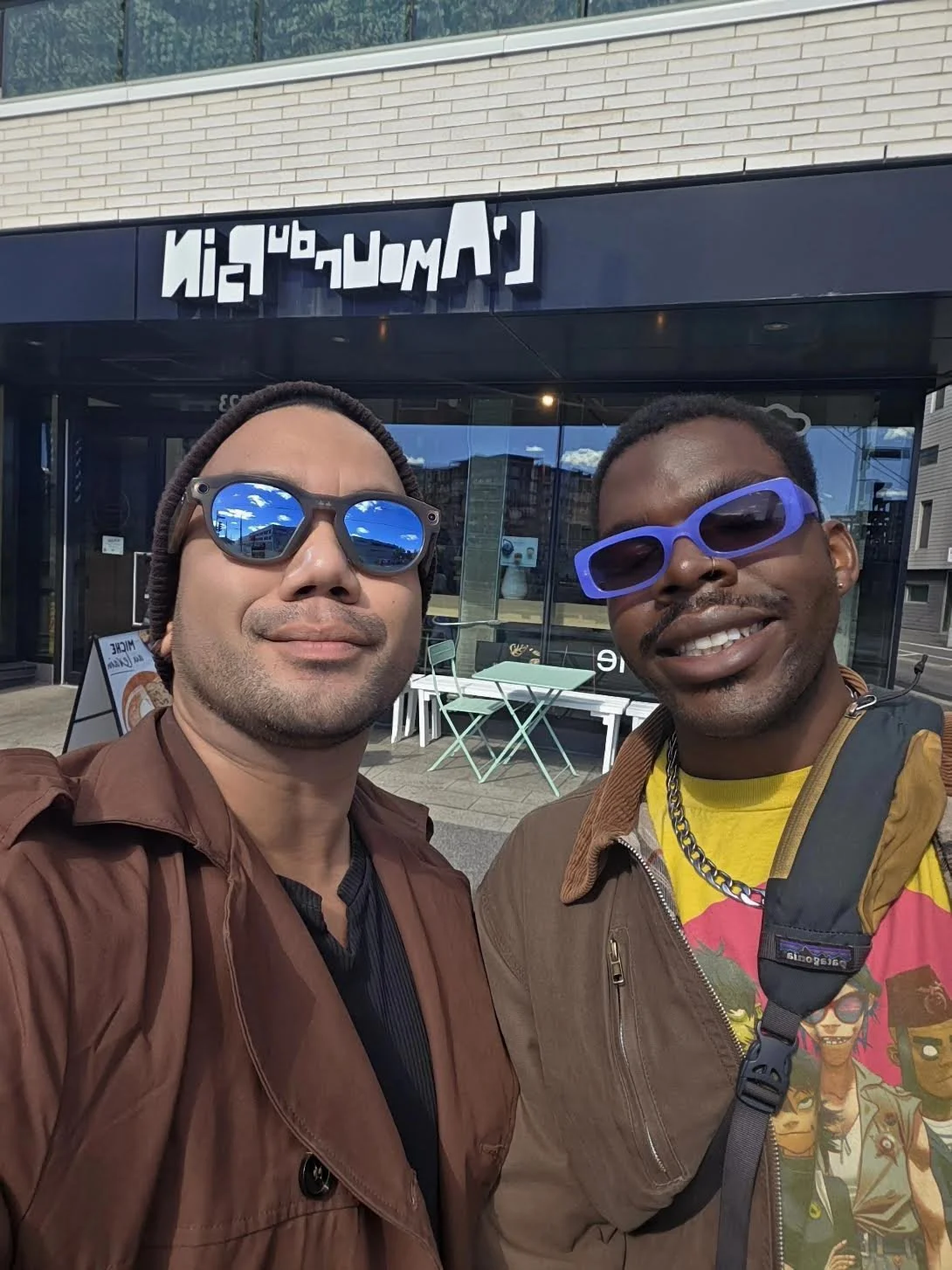
resurrect everything I'd carefully planned. Jeremy and I mostly made the day up as we
went. It had been three years since Jeremy moved to Montreal and far too long since I'd
properly visited. We'd first met thirteen years ago working together at HMV, back when
music and movies weren't simply things we enjoyed but quite literally the backdrop of
our friendship. This weekend had become the perfect excuse to finally make good on
saying I'd finally visit him after finishing grad school—and to see one of our favourite
bands together while I was at it.
So, we walked.
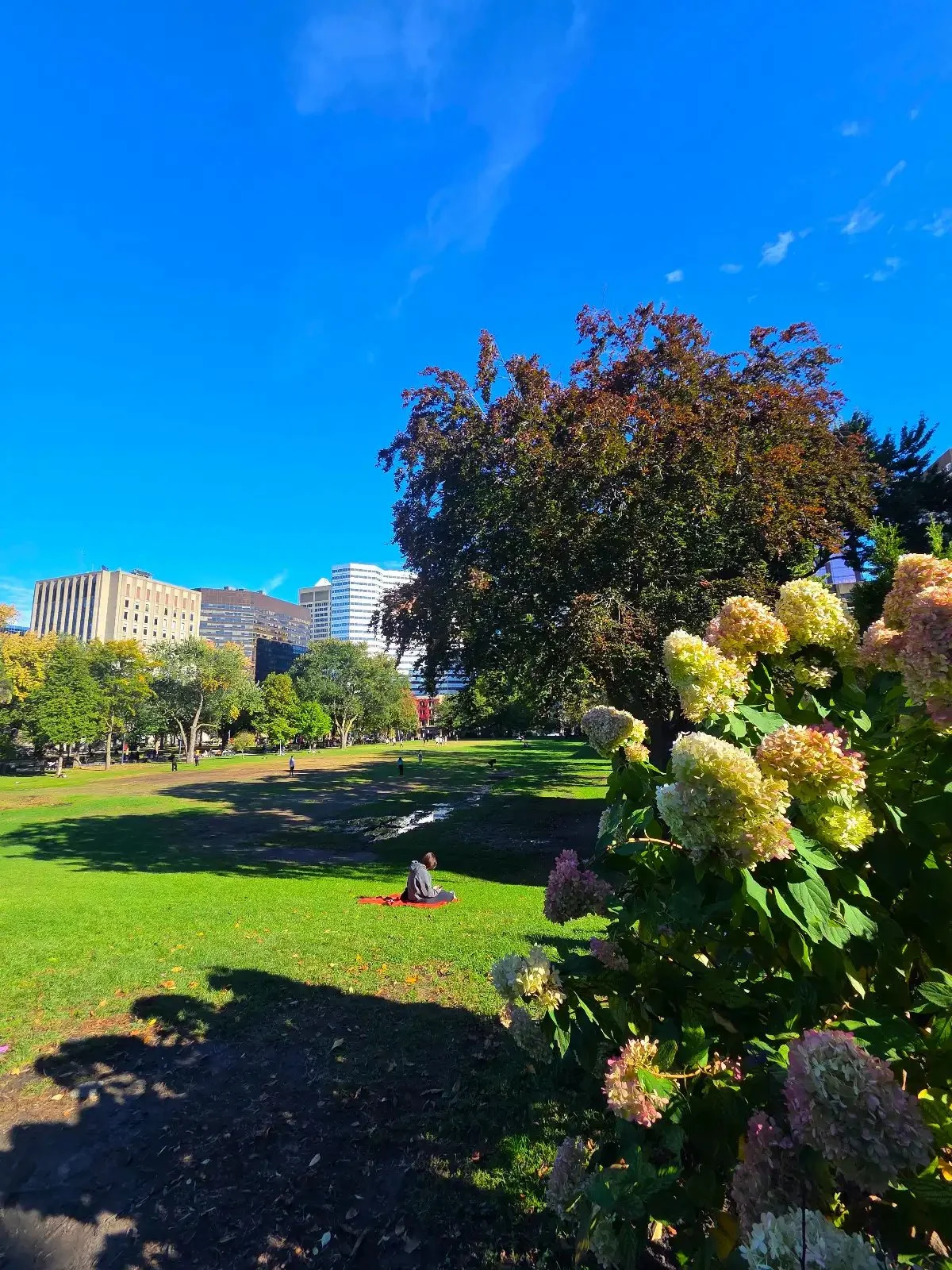
Through local parks. Down streets neither of us seemed particularly concerned about
naming. We caught up over coffee and revisited memories from versions of ourselves
who somehow feel simultaneously very distant and embarrassingly recent. We dropped
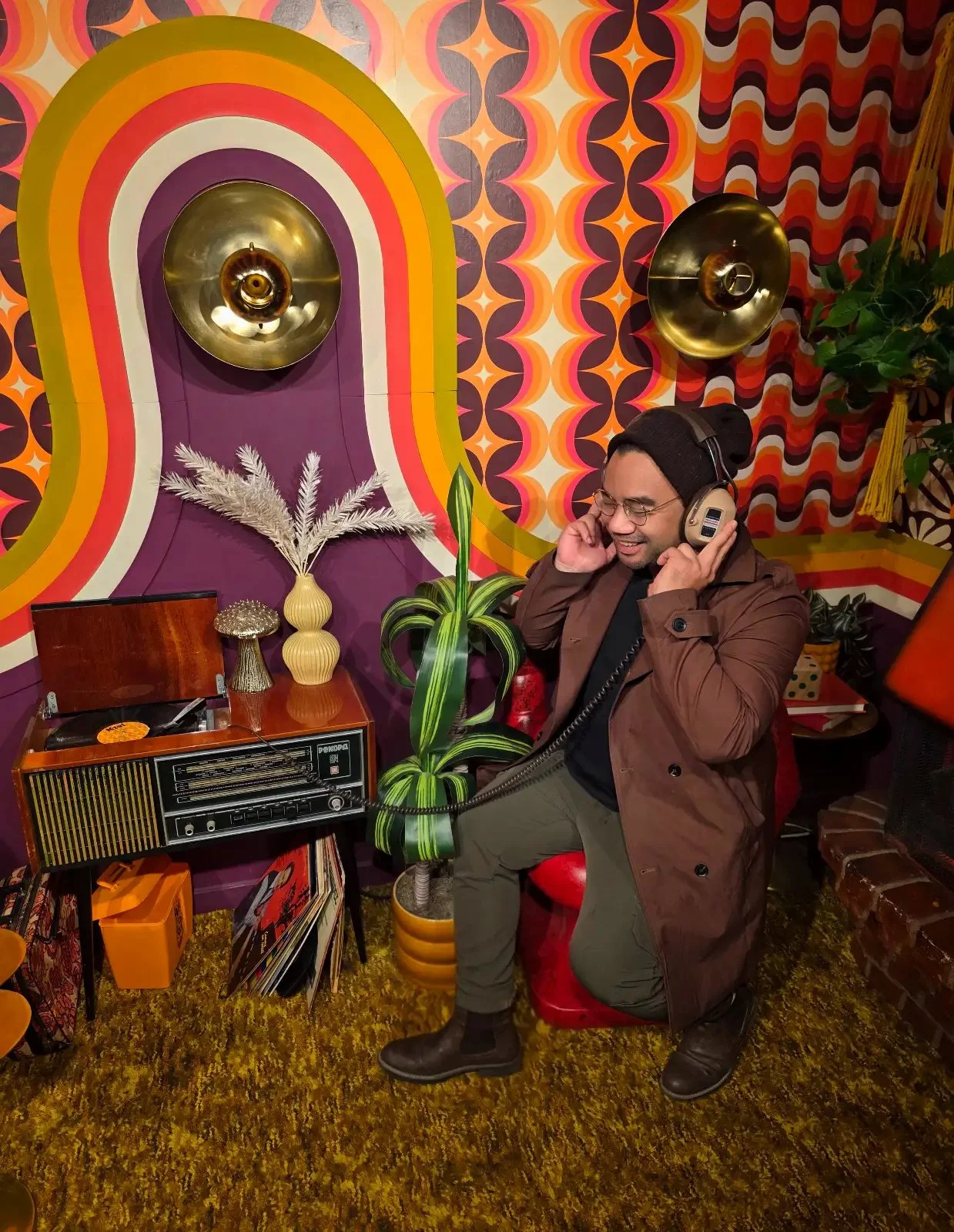
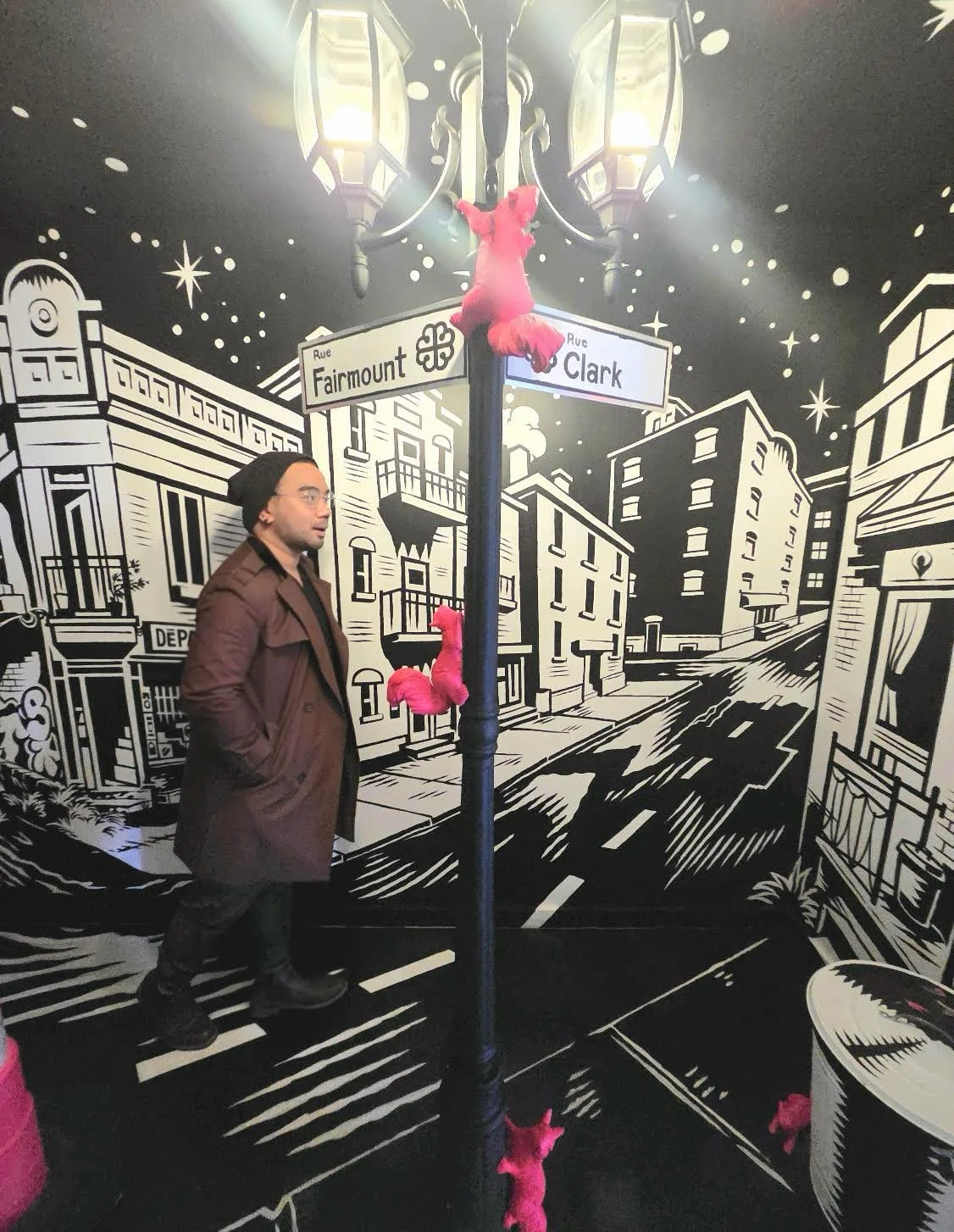
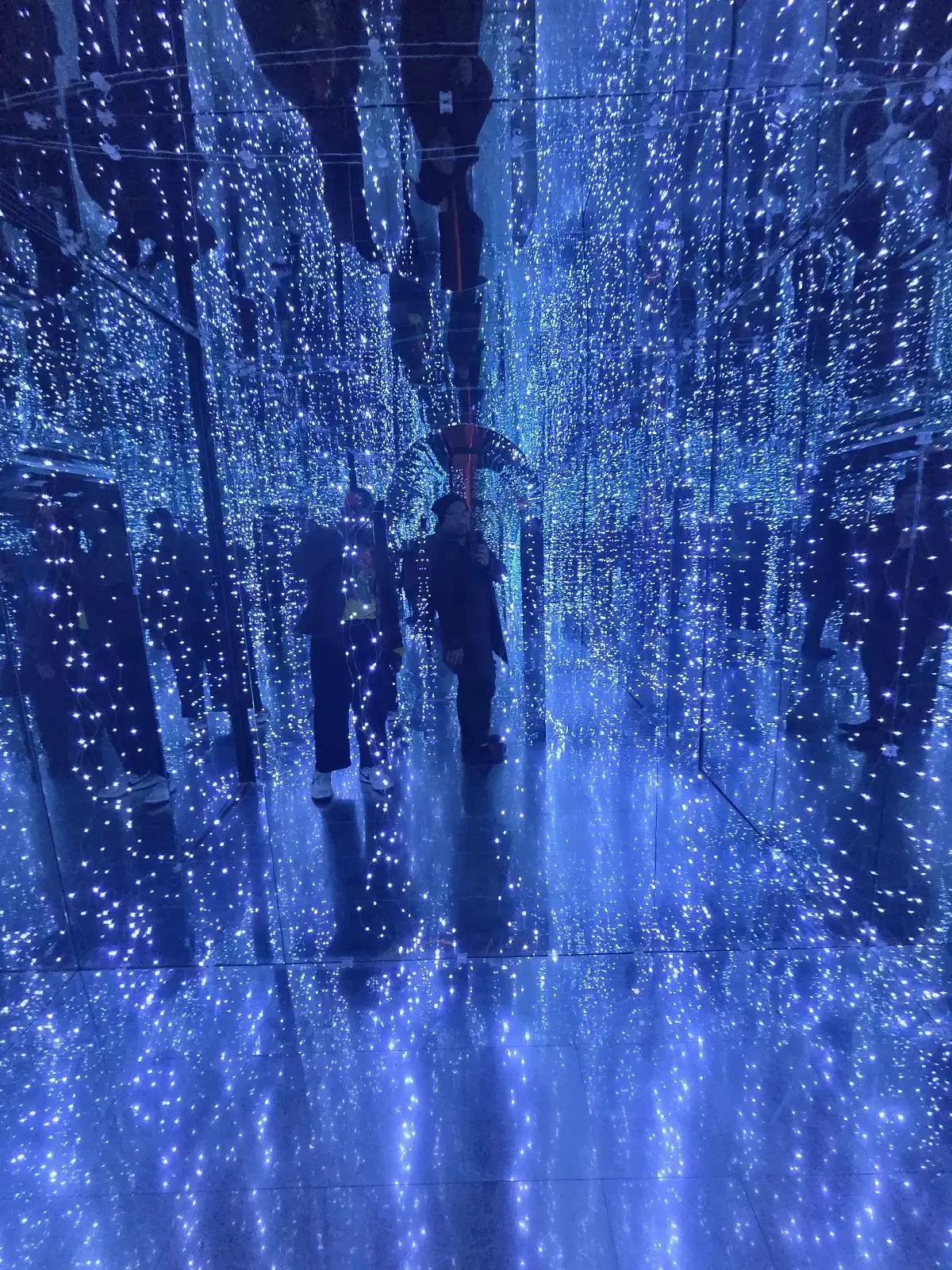
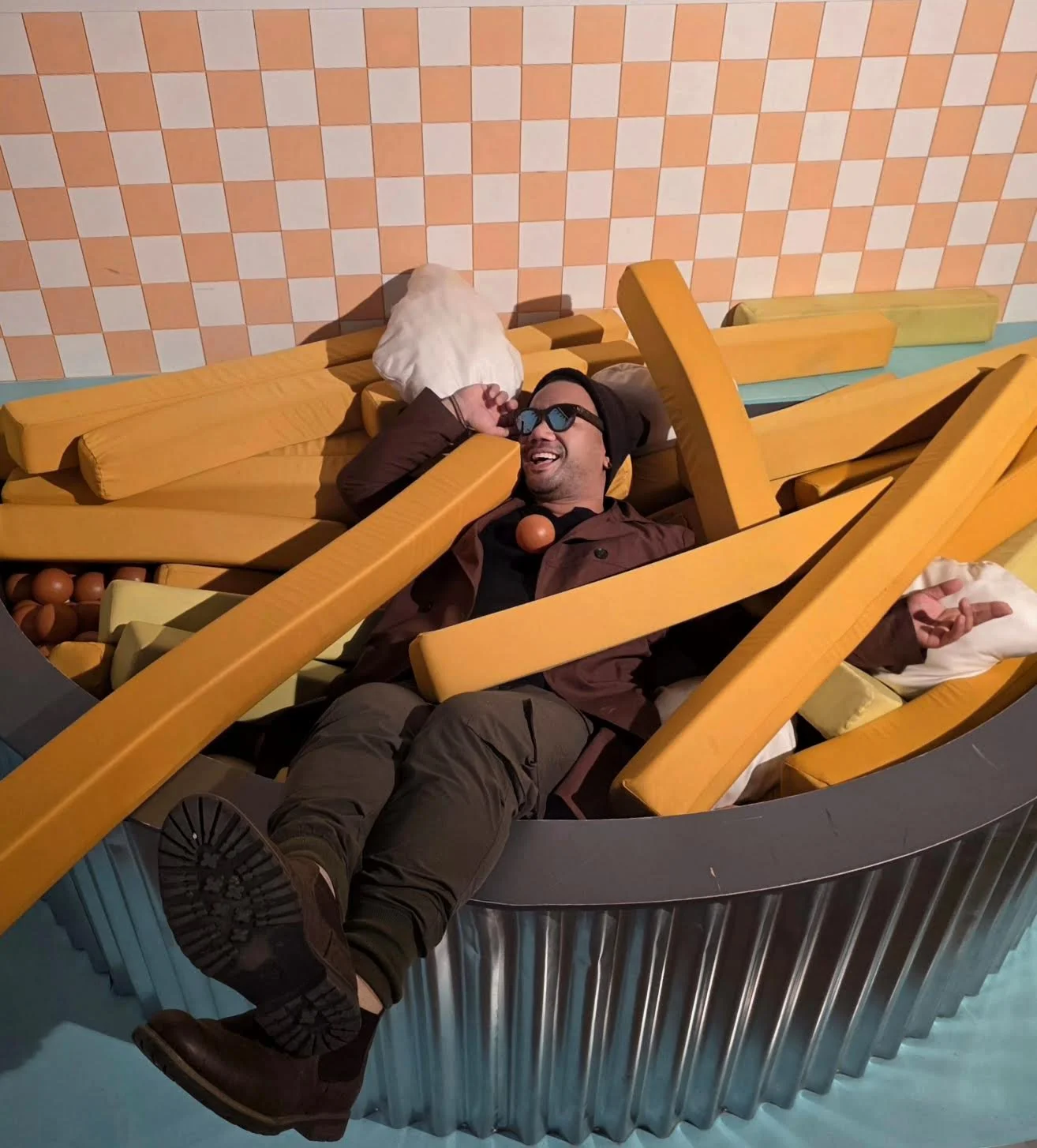
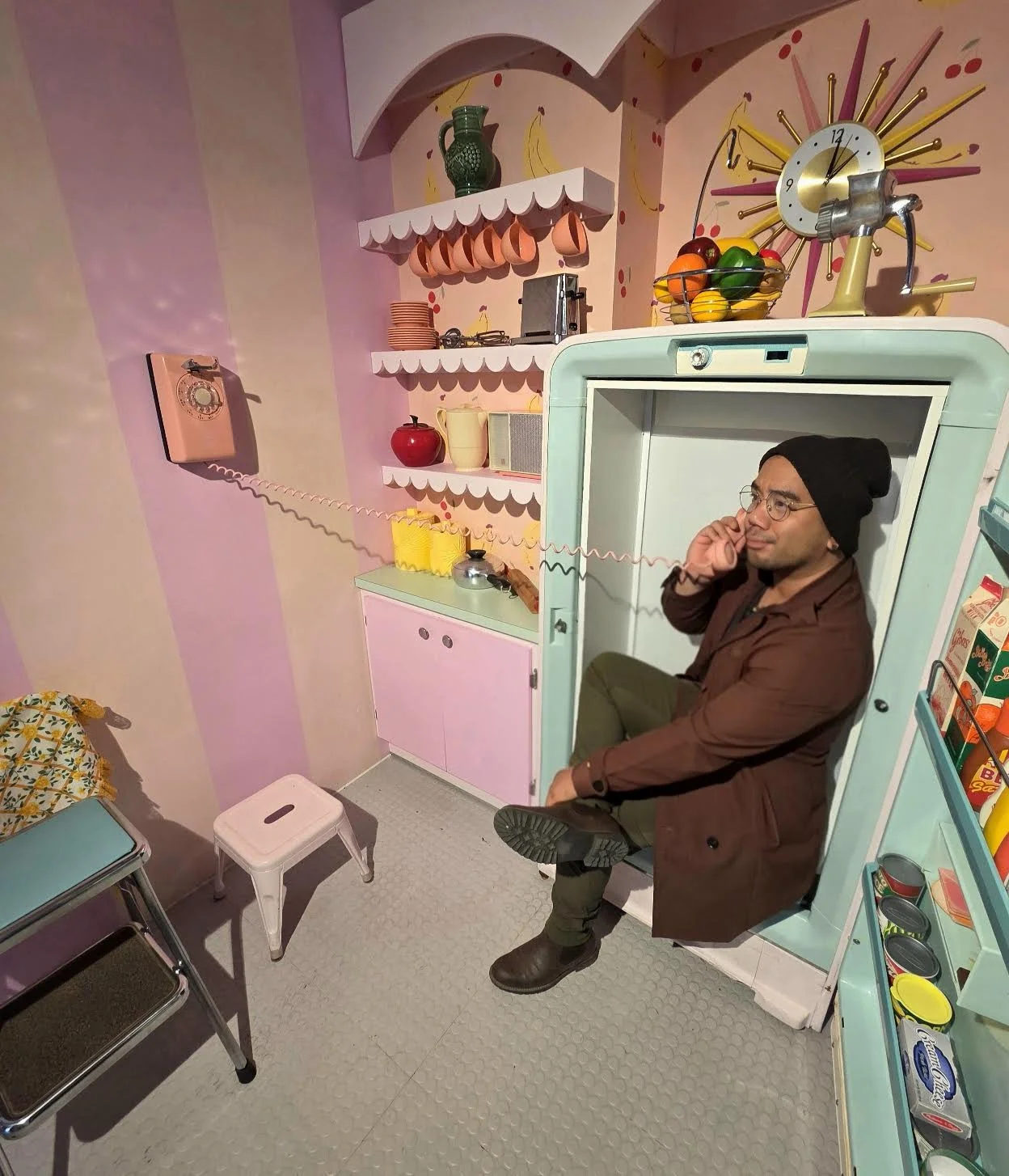
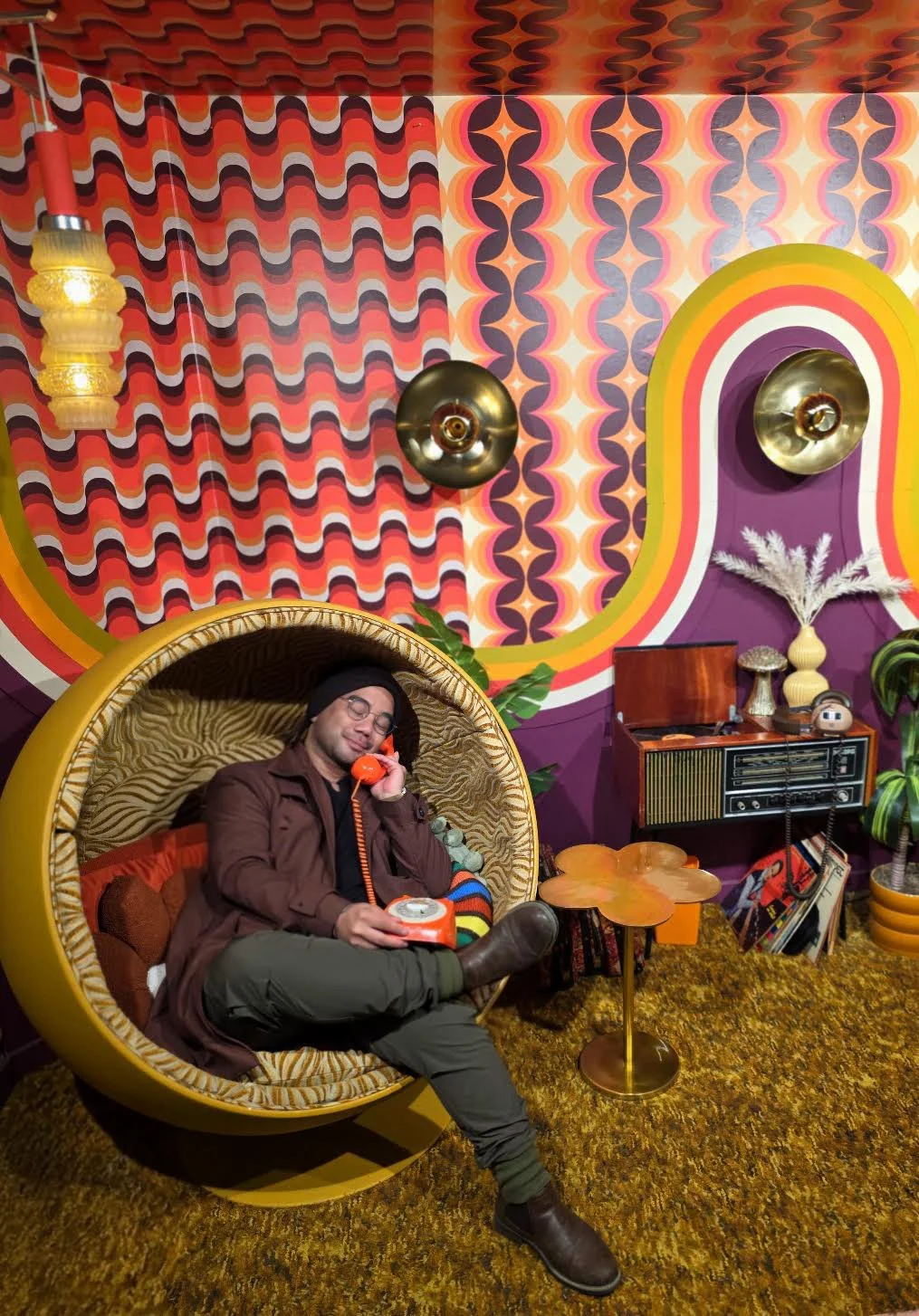
into a photo-art installation, took ridiculous pictures, and kept walking.
One image stayed with me afterward: a collection of hearts, each broken somewhere
different, yet somehow still beautifully put together. I didn't think much of that
juxtaposition in the moment, but looking back at the photograph later, I found myself
recognizing something in it—the quiet possibility that brokenness and beauty can
occupy the same space.
Eventually, we stumbled into another familiar ritual.
We went to the movie theatres.
There was something wonderfully ordinary about that.
Thirteen years ago, Jeremy and I could decide on a whim to catch a movie after
spending hours surrounded by them at work. Now, in another city and considerably
different versions of our lives, we were essentially doing the same thing.
We ended up seeing Digger, a dark comedy whose satire, among other things, takes
aim at our appetite for excess and the contradictions of modern consumption.
The irony wasn't entirely lost on me afterward.
I'd arrived in Montreal with an itinerary built around doing more, only to find that one of
the best days I'd had in a while required remarkably little.
A park.
A coffee.
A string of silly photos.
An impulsive movie.
Thirteen years of stories worth revisiting.
Walking until we found somewhere else worth stopping.
Perhaps some of the luxuries we spend so much of our lives exhausting ourselves to
afford aren't particularly luxurious at all. Some are remarkably free: time, movement,
laughter, familiarity, and the privilege of still being able to make a new memory with
someone who remembers the old ones.
And then, eventually, there was music.
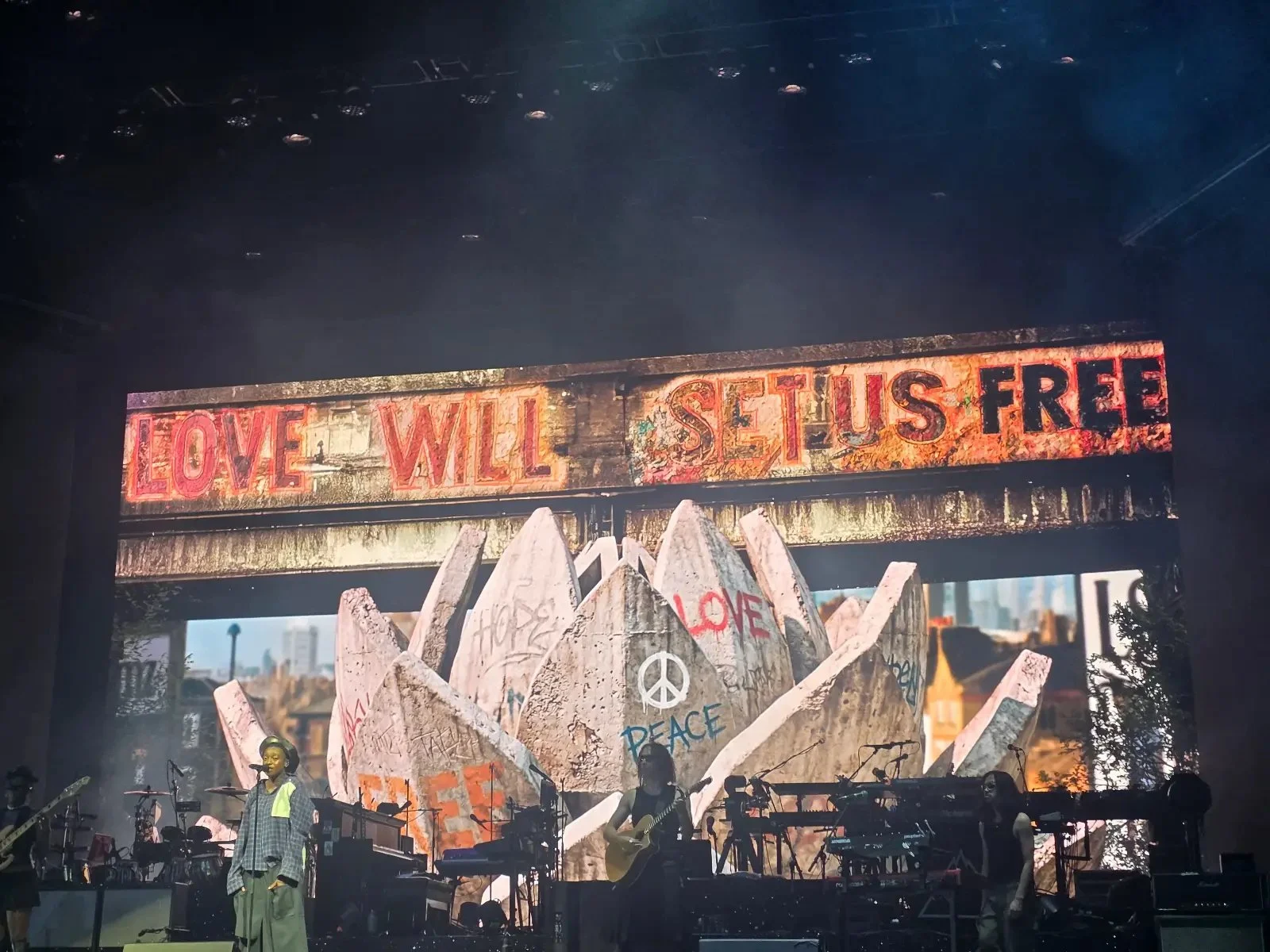
The reason that had helped bring the whole weekend together was waiting for us that
evening.
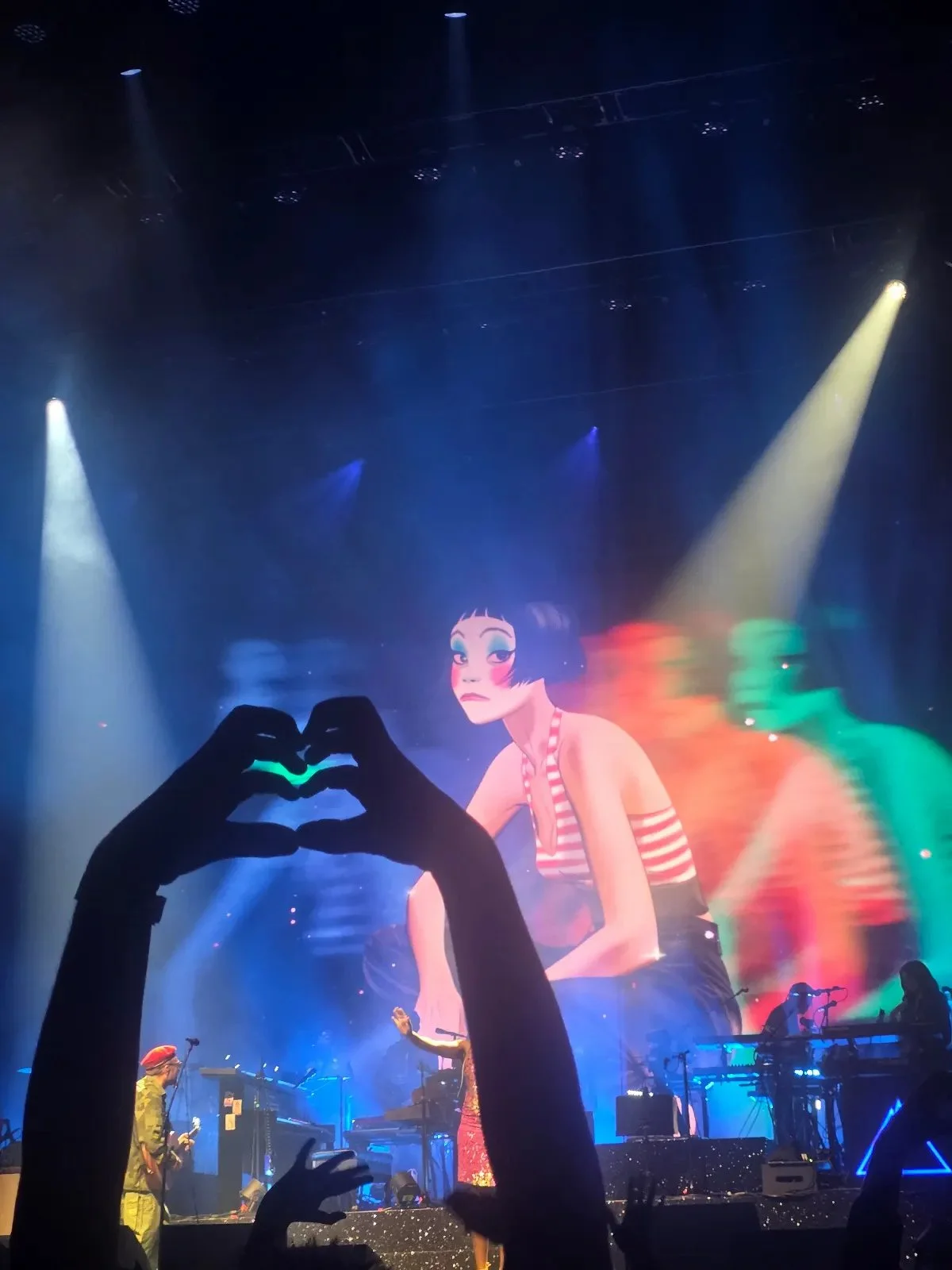
Somewhere between the lights, the noise, and hearing songs that had soundtracked
much younger versions of ourselves, the concert became more cathartic than either of
us had anticipated.
There was something almost ridiculous about being grown men standing there together,
thirteen years after first meeting in a music store, briefly finding our way back to some of
the angst and abandon of who we'd been then.
We laughed.
We yelled.
We sang songs we had no business still knowing so instinctively.
And somewhere in all of it, there unravelled tears.
It didn’t feel as cathartic until the first note struck and sung by Damon Albarn cited On
Melancholy Hill.
I've always thought the word melancholy was defined by a peculiar corner of sadness. It
isn't necessarily the sharpest kind of sadness—the kind that demands something from
you immediately—but rather the quieter ache that settles underneath things.
Longing.
Absence.
The strange loneliness of knowing that something, someone, or even some version of
yourself cannot be returned to exactly as they once were.
Grief has taught me quite a lot about that kind of sadness.
Over the past year, I've learned that grief doesn't disappear simply because something
good is happening. I've carried it into beautiful places. I've heard it underneath laughter.
I've felt someone missing while surrounded by people I love.
And increasingly, I've stopped interpreting those contradictions as evidence that I'm
somehow doing grief incorrectly.
Jeremy understands some of that weight himself. He lost his mom to cancer, and he
also knew the person whose absence I've been learning to carry over this past year.
There are certain things about loss that don't require much translation between us
anymore.
Maybe that's partly why hearing On Melancholy Hill beside him landed differently that
night.
There is something about the song's brightness wrapped around longing that feels
increasingly familiar to me: that strange possibility that even when we cannot have
exactly what—or who—we want, there can still be comfort in finding someone beside us
for a while.
Maybe that's what this weekend had been quietly offering me all along.
Not an escape from sadness.
Small connections within it.
Coffee with an old friend.
Walking without much of a destination.
Laughing over thirteen-year-old memories.
Sitting beside someone who understands loss without requiring its translation.
Standing shoulder-to-shoulder in a crowd while a song from another lifetime somehow
makes room for this one.
I cried.
And I smiled.
For once, neither seemed to cancel the other out.
Melancholy really did feel good in Montreal.
───






Then it was time to go home.
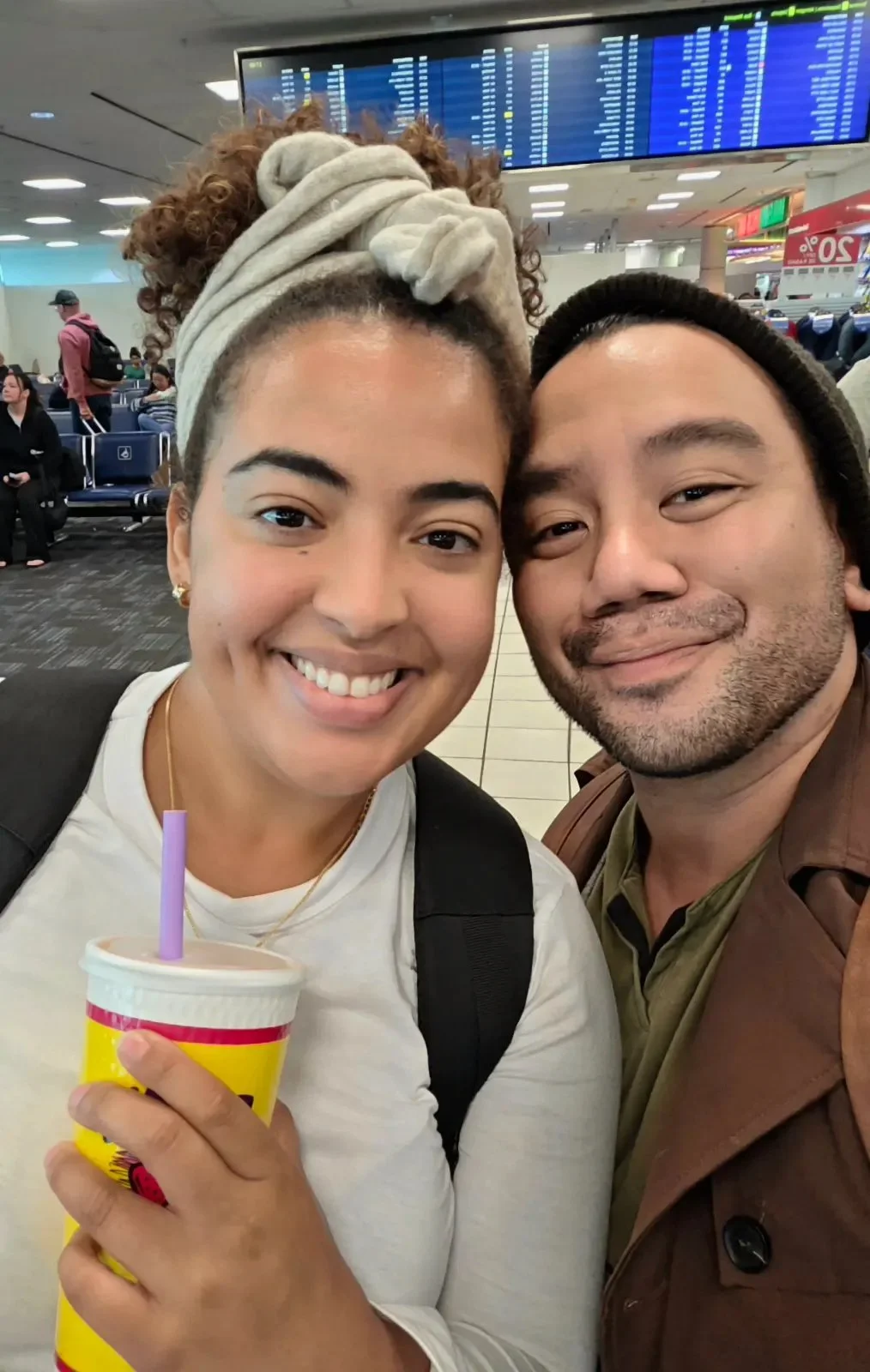
There is a particular kind of vulnerability that comes from being alone in an airport on
very little sleep. Maybe it's the fluorescent lighting. Maybe it's exhaustion. Maybe it's
simply having nowhere else you're required to be except exactly where you are.
Whatever it was, somewhere in a six-hour connecting layover, movement stopped
again.
I sat alone at my gate and found myself thinking about how different this same world
had felt a year earlier.
Back then, there had still been one more person living in it.
That's one of the stranger things about grief. The geography remains mostly
unchanged. Planes still leave. Concerts still happen. Friends move to different cities.
People travel and come home again.
The world keeps turning.
And yet yours has somehow become smaller by one.
Then, by complete chance, someone walked past me.
Narjiss, a mutual friend of someone I had loved and recently lost.
She was on her own journey home too, returning from a solo trip through Portugal, and
somehow our respective routes had deposited both of us in the same airport gate lobby
at the same time.
So, we sat together.
We talked about travelling. About life. About the person we both missed.
Our common person gone.
And for a little while, neither of us was travelling alone.
There was no grand revelation in that conversation. Nothing about grief suddenly
became easier or made more sense. We simply shared the strange familiarity of
missing the same human being from two different places in her life.
Eventually, our plane was called.
We stood up.
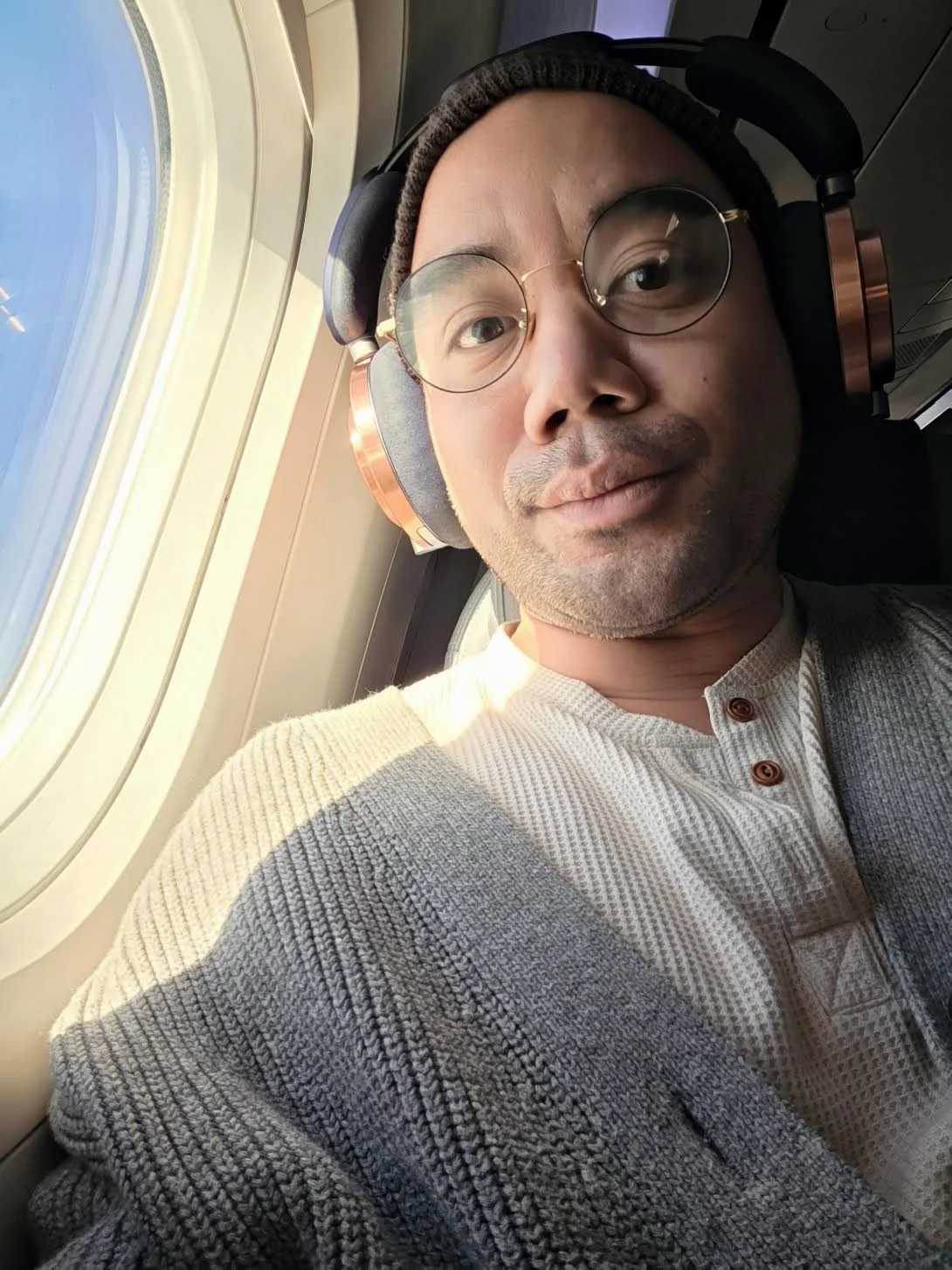
We boarded.
And somehow, the travelling felt a little more seamless from there.
I've spent a lot of this past year thinking about what it means to keep moving after loss.
I'm becoming less interested in the idea of moving on and more interested in learning
how to move with.
Sometimes that means crossing countries. Sometimes it means laughing beside an old
friend who understands more than you need to explain in words. Sometimes it means
making new memories while carrying old ones. And sometimes it means staying exactly
where you are long enough to hear what your mind and body have been asking of you.
Maybe grief isn't something waiting for us to leave it behind.
Maybe it travels differently as we do—occasionally heavy enough to stop us,
occasionally light enough to dance beside, and every so often shared unexpectedly with
someone carrying a piece of the same person.
This weekend began with my body forcing me to stop. Somewhere along the way, an
old friend reminded me how good it can feel to wander. A song reminded me that
sadness and joy don't have to compete for the same space. And on the way home,
chance reminded me that even when someone is gone, traces of them continue moving
through the world in other people.
For all the heaviness grief has shown me, it has also made me increasingly aware of
just how much remains to be grateful for. I feel incredibly fortunate—blessed, even—for
the people still beside me, the memories I get to carry, the places my feet can still take
me, and the privilege of continuing to make new memories alongside the old ones.
Maybe that's what I'm carrying with me into Thanksgiving this year: gratitude doesn't
require us to overlook what's missing. Sometimes knowing what it means to lose
something only makes us hold what remains a little closer.
And perhaps that's worth reflecting on—not just what we have to be thankful for, but
what, and who, we've learned not to take for granted.
We rest.
We remember.
We grieve.
We feel good.
We feel melancholy.
And when it's time, we keep moving.
Not to move on.
But to move with.
